Our People
The team
Operators, scientists, and sector experts who have built at scale — now working alongside founders to create lasting impact.
Founders

Benjamin Callis
Founder
Ben Callis is a visionary technical founder and CEO whose grit and determination are second to none. Before founding Ivy House, Callis made a name for himself by playing a critical role in shaping several successful startups' product strategies and designs in the mortgage, business intelligence, and education sectors. His expertise in these areas is evident in the accolades and achievements of the companies he has worked with. Callis is highly skilled with an education from the prestigious MIT and Sloan School of Management. He has also completed several cohorts at the Stanford D school, further honing his skills in design and innovation. But Callis's contributions to the industry go far beyond his professional accomplishments. He is passionate about teaching and mentoring, teaching coding and UX design to over 5,000 students. He is also actively engaged in cultivating new talent by sharing his knowledge and network."

Christopher Johnson
Founder
Christopher is a global fixture in the philanthropic space with extensive experience in leading sustainable community empowerment initiatives and managing large-scale internatinoal projects from inception to completion. He has successfully guided cross-functional, multicultural teams, drawing on over 30 years of hands-on experience in Latin America, Africa, and Southeast Asia. Throughout his career, he has worked closely with local facilitators to implement anti-poverty strategies rooted in core values, leadership development, community ownership, and self-determination. One of Christopher's key passions is combining mission and purpose with the discipline and efficiency of business to create impactful tools that address unmet needs in financially sustainable and scalable ways. Outside of his professional life, Christopher is an avid mountain biker, cyclist, hiker, runner, and adventurer. Whether he’s exploring new places, diving into innovative technologies, or learning from the wisdom and insights of his three incredible children, Christopher finds fulfillment in the experience of learning and connecting with others.
Advisors
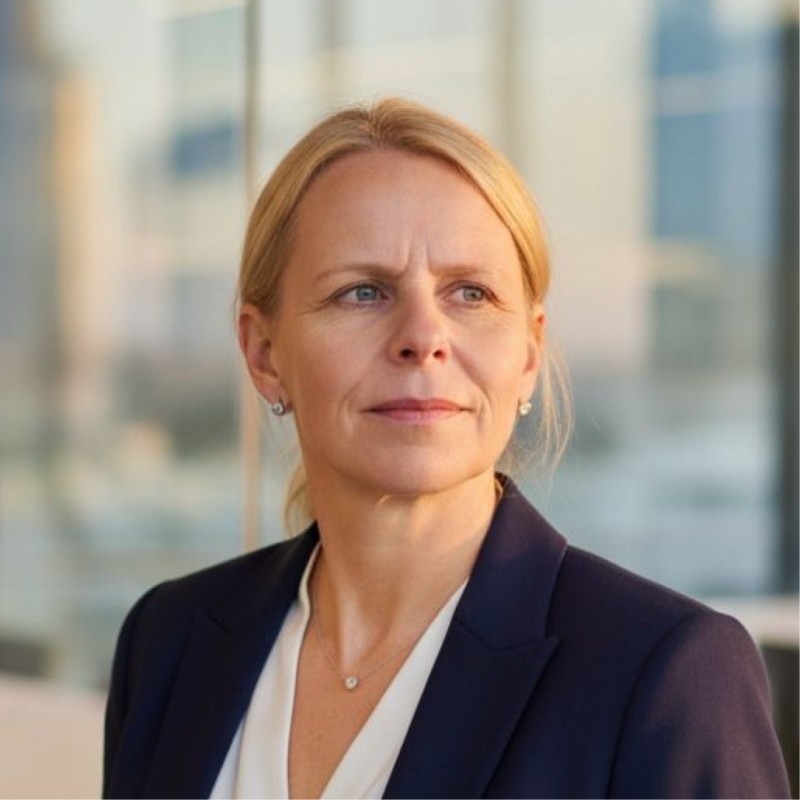
Lorraine Bassett MBA, PHD
Impact Advisor
As a globally experienced senior executive, I'm passionate about driving strategic business development, alliance initiatives and cross-functional collaboration to achieve exceptional outcomes. With a career built on a foundation of global sales leadership, strategic business development, and technical expertise, I thrive in a complex, dynamic and multicultural ecosystem. I have driven billions of dollars in cloud enterprise technology sales and won top-tier partnership achievements including the prestigious Stevie award for global business development. My proven ability to lead teams to surpass target goals, coupled with my deep industry relationships and engagement with senior executive stakeholders, have been key to my success. At Amazon Web Services (AWS), I led the strategic initiative to create the first-ever Worldwide Partner Solutions Factory for Industries, resulting in groundbreaking growth with services expansion into Manufacturing, Transportation and Travel and Hospitality industries. I defined and executed a new Go-To-Market (GTM) model for solution offerings, achieving 180% of solutions goal and 130% of annual recurring revenue goal. As a senior executive and global VP, I developed and executed a strategic vision, leveraging AWS, IBM, Rackspace, SAVVIS and CSC partnerships to expand Racemi, Inc.'s Global Reach, achieving 80%+ sales growth year-over-year. Today, as a seasoned Amazon business development strategist, I continue to build and lead high-performing global teams to generate $5 Billion in revenue by 2030, establishing actionable, transformational strategies, delivering a clear, and compelling vision to align and drive for overall productivity and success. I bring to bear a unique blend of Global Business Perspective, Strategic Planning and Execution, Team Building & Leadership, Think Big Partnership Development and operational excellence. I am passionate about driving transformative change while fostering a culture of trust and team empowerment to achieve extraordinary results.
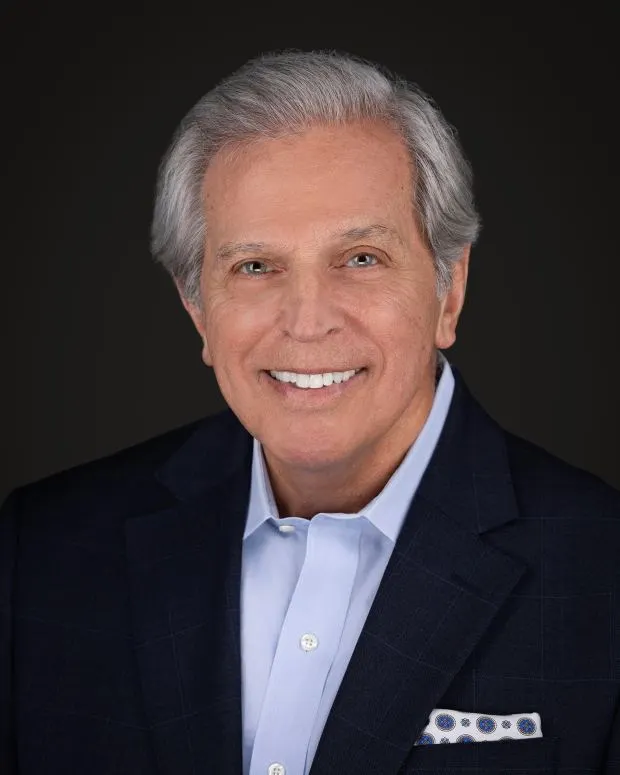
Robert F. Mancuso
Securities Advisor
Chief Executive Officer Robert F. Mancuso is the Chief Executive Officer of Capri Capital, LLC and related entities including Capri Capital Partners, through which investments in family held companies are made, and Capri Consulting, which advises families on the challenges they face resulting from intergenerational transfer. Robert is a pioneer in the alternatives assets category. He was the first President and Chief Executive Officer of Merrill Lynch Capital Partners, Inc., the entity responsible for establishing and growing Merrill’s private equity business. Merrill was the first Wall Street firm to raise a captive private equity fund from institutional investors. In helping found Merrill Lynch Capital Partners, Robert was instrumental in designing its very successful strategy of being the "White Knight" to companies under threatened takeover from raiders who were financed by Drexel Burnham and Mike Milken. While at Merrill, he sourced and led the team which closed the first ever billion dollar leveraged buyout, which was done with KKR as Merrill’s equity partner. Over his career he led teams that raised over $7 billion in financing, tapping numerous providers of senior, mezzanine, and equity capital, from both public and private sources. Robert has also served on the boards of directors of twelve companies ranging in size from $75 million to $4 billion in annual sales, many of which had previously been publicly traded. His corporate governance experience includes having been elected non-executive chairman of the board, a member of the executive committee, and a member of the compensation committee. Prior to joining Merrill Lynch, he was associated with Lazard Freres & Co for four years, in its Corporate Finance department raising capital for domestic and multinational corporations and intergovernmental entities. He also practiced law with the United States Securities and Exchange Commission in Washington, D.C. before joining Lazard. A prolific author, Robert has written numerous articles dealing with the challenges that family businesses face as a result of the Great Wealth Transfer, the imposition of confiscatory transfer taxes, and the unintended consequences of the growing popularity of wealth taxes. His articles have been published by a number of leading media outlets, including Real Clear Markets, the Chicago Tribune, and Bloomberg under both its Tax and Law categories. The full library of Robert's publications is available on our News and Insights page. He holds a Masters in Business Administration from the University of Chicago’s Booth School of Business as well as a JD degree from Cornell Law School. He also has been a representative of the United States family business community on Capitol Hill, having visited and advocated with members of the US Congress’ Family Business Caucus on three occasions with regard to pending legislative proposals.

Walter Frank
Financial Advisor
Entrepreneur with a unique blend of experience as both an allocator and an operator, driving growth at the intersection of capital and deal flow in the financial services, real asset, specialty finance, data center, and space industries. In my 20s, while employed full-time, I founded and bootstrapped a real estate business to $30M+ in assets with minimal outside capital through creative financing and strategic partnerships. Shaped by firsthand experience scaling a business from the ground up, I place a strong emphasis on aligning with entrepreneurs when deploying capital. My top-down investment philosophy draws from a career foundation in banking and investing, combined with hands-on experience establishing and operating a single family office. I partner with both entrepreneurs and family offices—helping founders navigate the capital landscape while enabling family offices to deploy funds efficiently. I focus on sourcing and structuring permanent capital from the right partners, including single and multi-family offices, institutional asset managers, private equity firms, and other long-term investors. My approach centers on aligning incentives, driving operational results, and forging partnerships that support the entrepreneur’s long-term vision.

Zenia Tata
Impact Advisor
Zenia Tata is an innovation strategist, a trained futurist, and a humanitarian who is passionate about tapping the vastness of human potential to tackle the planet's most vexing problems. As an independent consultant, Zenia has been leading innovation projects and advising on sustainable impact initiatives for Kitty Hawk Ventures, MAKR Venture Fund, Pure Technologies, Breakthrough Victoria , a 2-billion-dollar impact investment fund for the Prime Minister’s Office of Australia ; an affordable and sustainable housing design project for Emaar Properties through ExO Mesh ; and sustainability related consulting projects globally for BCG . Zenia spent a decade as Chief Impact Officer at XPRIZE where she created a new prize development methodology and designed more than 25 different innovation challenges to incentivize development of moonshot technologies in areas such as hydrogen energy, carbon dioxide removal, zero-waste mining, alternate proteins, desalination, age-reversal, and water abundance . During this time, she trained as a futurist and launched XPRIZE’s future foresight practice , which produced deeply researched impact roadmaps that outlined the breakthroughs necessary to achieve preferred future states of housing, environmental conservation, human longevity, and global food systems. Her last large-scale effort at XPRIZE was the groundbreaking design of the $100 million Carbon Removal prize funded by Elon Musk that incentivized solutions for the capture and sequestration of atmospheric CO2. Before XPRIZE, Zenia served as Executive Director of International Development Enterprises (iDE) USA , a nonprofit company that creates market-based approaches to help impoverished farmers in 20 developing countries generate income. Working in post-disaster zones and some of the poorest villages, she honed an approach to poverty alleviation that begins with a deep understanding of the local context and market dynamics to create lasting impact. Her proudest achievement was iDE’s ability to lift 24 million farm families out of the cycle of poverty. Zenia's popularity as a public speaker reflects her talent for clear and inspiring communication around complex ideas. Her keynotes cover her methodology of creating audacious impact. This unique approach combines moonshot thinking with design principles drawing from biomimicry and science fiction. She is currently authoring a book on Audacious Impact , which is influenced by her 25 years of global field experience in implementing innovations to solve planetary-scale problems. Through her 25-year global career, Zenia has often been quoted as a breakthrough thinker and practical futurist in international technology publications like Wired magazine , and media outlets like the BBC . She is an experienced keynote speaker and facilitator who has created her own validated workshop methodology for foresight and breakthrough identification in sectors like energy, water, global food systems, waste, and human health and longevity. A sense of adventure and an explorer’s mindset runs through Zenia’s life and work. Growing up in Bombay she dreamt of becoming an astronaut before becoming one of the few women in the ‘80s to become a pilot. Her love of the outdoors and extreme sports are reflected in her bold innovation designs which are influenced as much bybiomimicry as they are by the confluence of exponential technologies. Zenia is bold, brimming with optimism, and determined to change the world.
Industry Experts

Jim Royston
Space Expert
Senior executive with over 20 years of management and technical operations experience within the aerospace, defense, and commercial industries. Strategically focused with exceptional leadership skills. Effective at building high-performance teams and leading change in competitive business environments. Proven entrepreneur with multiple startup companies and successful M&A activities.
Ravi Arimilli
Deep Tech & Compute
Here is the full document with all square bracket citations removed: Ravi Arimilli Ravi Kumar Arimilli (born 1963) is an American computer engineer and IBM Fellow, best known as the Chief Architect largely responsible for the development of IBM's POWER5 microprocessor and for holding over 500 patents (as of 2023), making him one of the most prolific inventors in the United States. Born in Andhra Pradesh, India, Arimilli moved to the United States with his family in 1969, settling in Baton Rouge, Louisiana, where he later earned a B.S. in Electrical Engineering from Louisiana State University in 1985. He joined IBM that same year and quickly contributed to the development of the company's first RISC microprocessor for the IBM RT/PC, which ran the initial version of IBM's AIX Unix operating system. Throughout his career at IBM, Arimilli established himself as the company's leading expert on symmetric multiprocessing (SMP) system structures, cache and memory hierarchies, and system bus protocols, innovations that were central to the performance of RS/6000 and eServer pSeries Unix systems, including record-setting models like the J30/R30 and F50/H50. He later contributed to projects like the Power7 processor as chief scientist. Arimilli's notable achievements include his work on the Blue Pacific supercomputer project for Lawrence Livermore National Laboratory and serving as Chief Architect and Lead Engineer for the Power4 GigaProcessor Storage subsystem in IBM's 32-way eServer p690, code-named Regatta, which integrated dual microprocessor cores, cache, I/O, switches, and memory on a single chip. In May 2001, he was named an IBM Fellow, the company's highest technical honor, and has received IBM's Inventor of the Year award annually since 1998. His extensive patent portfolio, particularly those from 2002 focused on Regatta innovations, underscores his impact on high-performance computing architectures. After retiring from IBM in 2017, Arimilli joined State Street Corporation as Senior Vice President of Global Technology Services. Early Life and Education Childhood and Immigration Ravi Arimilli was born in 1963 in Eluru, Andhra Pradesh, India, into a family that placed a strong emphasis on education, as evidenced by his father's pursuit of a geology degree at Louisiana State University. In 1969, at the age of six, Arimilli immigrated to the United States with his family, including his brother Baba, settling in Baton Rouge, Louisiana, in the southern US. Upon arrival, he spoke only Telugu, which presented initial challenges in adapting to a new cultural and linguistic environment as an immigrant child. Arimilli's early exposure to American culture included watching the Apollo moon missions on television, which sparked his fascination with technology and engineering. His family's immigrant experience fostered a sense of curiosity; as teenagers, he and his brother disassembled household items like their Firebird and Chevy Impala cars to explore mechanics, laying the groundwork for his interest in STEM fields influenced by parental encouragement toward technical pursuits. University Studies Ravi Arimilli attended Louisiana State University (LSU) in Baton Rouge, Louisiana, where he studied electrical engineering. He earned a Bachelor of Science degree in Electrical Engineering from LSU in 1984. This program provided foundational knowledge in areas such as circuits, computer engineering, and early computing systems, preparing him for advancements in processor and system design. During his time at LSU, Arimilli was involved in competitive tennis, playing on the college circuit and competing against notable players like John McEnroe. He briefly considered pursuing a professional tennis career before deciding on technology. Following his graduation, Arimilli joined IBM in 1985, transitioning directly from academia to a professional role in technology development. IBM Career Entry and Initial Roles Ravi Arimilli joined IBM in 1985 as an engineer at the company's facility in Austin, Texas, where he focused on server and processor development. His initial assignment involved working on the team developing the first reduced instruction set computer (RISC) microprocessor for the IBM RT/PC, a pioneering system that ran IBM's version of Unix, AIX 1.0. This early role allowed him to contribute to foundational aspects of microprocessor architecture, building expertise in hardware design. Throughout the late 1980s, Arimilli progressed through roles in hardware engineering, gaining hands-on experience with symmetric multiprocessing (SMP) structures and system bus protocols essential for high-performance computing. He collaborated with teams on mainframe-related projects and early microprocessor initiatives, which honed his skills in optimizing data flow and interconnectivity within complex systems. In the 1990s, Arimilli's reputation within IBM solidified through key team projects, including contributions to the IBM RS/6000 family, such as the Models J30/R30 and F50/H50, which achieved performance benchmarks at their release. He also participated in the development of the Blue Pacific supercomputer for Lawrence Livermore National Laboratory, advancing SMP and memory hierarchy designs that influenced subsequent Unix server architectures. These efforts established him as a core contributor to IBM's hardware innovations during this period. Rise to Fellowship In May 2001, IBM announced the appointment of Ravi Arimilli as an IBM Fellow, the company's highest technical honor, in recognition of his groundbreaking innovations in computing architecture. This distinction highlighted his exceptional technical leadership demonstrated through prior contributions at IBM, where he had advanced from engineering roles to influential positions in system design. The selection for IBM Fellowship emphasized criteria such as profound impact on the field, strategic influence, and a robust record of inventions; by 2001, Arimilli had established himself as a leading inventor, earning IBM's Inventor of the Year award annually since 1998 with 18 patents issued that inaugural year alone, followed by sustained high productivity in subsequent years. At age 38, Arimilli became the youngest recipient of this honor in IBM's history. As Chief Architect for eServer Microprocessors and Systems, Arimilli immediately took on responsibilities overseeing large-scale projects and cross-functional teams, directing the architectural vision for IBM's server platforms. His fellowship elevated his influence on IBM's strategic priorities in high-performance computing during the early 2000s, steering investments in scalable systems that bolstered the company's competitiveness in enterprise servers amid intensifying market demands. Leadership in Processor Development Ravi Arimilli served as the Chief Architect for IBM's POWER5 processor, leading its design and release in 2004, which marked a significant advancement in symmetric multiprocessing (SMP) systems with support for up to 256 processors. Under his leadership, the POWER5 architecture introduced multi-core processing with dual cores per chip, enhancing scalability for enterprise servers and enabling efficient handling of complex workloads in Unix environments. This design emphasized modular scalability, allowing seamless integration into larger systems while optimizing power efficiency and performance per watt, which was critical for data centers. Arimilli's contributions extended to earlier and subsequent POWER processors, including key enhancements to the POWER4 released in 2001, where he focused on high-frequency clock speeds and copper interconnects to boost server performance for commercial computing. For the POWER7 in 2010, he oversaw architectural improvements in on-chip accelerators and memory bandwidth, including collaborative work on high-performance interconnects, targeting superior throughput in high-performance computing and analytics servers. These efforts built on a progression of innovations that positioned the POWER series as a competitive alternative to x86 architectures in enterprise settings. As leader of the POWER development teams, Arimilli managed over 500 engineers across global sites, coordinating the integration of advanced features such as hardware virtualization through PowerVM and simultaneous multithreading (SMT) to improve resource utilization and parallelism. His strategic oversight ensured these technologies were production-ready, fostering collaboration between hardware and software groups to deliver robust, reliable systems. The business impact of Arimilli's leadership was profound, propelling IBM's Unix server market share from fourth place to second globally by 2005, with nearly 30% share, driven by the POWER5's commercial success in sectors like finance and manufacturing. This surge was attributed to the processor's ability to deliver scalable performance at lower total cost of ownership, solidifying IBM's dominance in high-end computing markets during the mid-2000s. Shift to Research and Analytics In 2011, Ravi Arimilli transitioned from his roles in microprocessor design and systems engineering to IBM Research in Austin, Texas, where he took on leadership responsibilities in data analytics software initiatives. This shift marked a pivot toward software-driven innovations, leveraging his hardware expertise to address the growing demands of data-intensive computing. As an IBM Fellow, Arimilli focused on developing scalable solutions for handling explosive data growth, emphasizing interconnected systems that enable real-time insights for enterprise and scientific applications. Arimilli served as Chief Architect for analytics, big data, and blockchain platforms at IBM, contributing to foundational architectures that supported enterprise-grade data processing. His work advanced IBM's big data platforms, including collaborations on high-performance computing systems like the "Delta" supercomputer deployed at Louisiana State University's Center for Computation & Technology, which utilized the POWER8 platform to facilitate large-scale analytics in fields such as bioinformatics and coastal sciences. He highlighted the need for such systems, stating, "The need for large-scale analytics in the scientific community has exploded," underscoring their role in enabling customizable, high-throughput data processing via innovations like the Coherent Accelerator Processor Interface (CAPI). Additionally, Arimilli contributed to IBM's cloud and AI strategies through involvement in cognitive computing efforts, representing a shift toward adaptive, learning-based architectures. Throughout this phase, Arimilli mentored younger engineers and technical leaders, fostering disruptive technologies through collaborative brainstorming sessions that yielded client-facing solutions. He also participated in talks on future computing trends, including presentations emphasizing how analytics and big data integrate with scalable hardware like POWER systems to simplify complex problem-solving in enterprise environments. These efforts continued until his departure from IBM in 2017. Technical Contributions POWER Processor Innovations Ravi Arimilli served as the chief architect for the IBM POWER5 processor, leading innovations in simultaneous multithreading (SMT) and cache coherence mechanisms that significantly boosted server throughput by allowing multiple threads to execute concurrently on shared resources while maintaining data consistency across cores. These advancements included dual-core designs with SMT support, enabling up to four logical threads per core and reducing latency in cache accesses through optimized directory-based coherence protocols, which improved overall system performance in high-demand workloads. Arimilli's patents on thread management and cache injection further supported these features by enhancing how threads interact with shared caches, minimizing contention and thrashing in multithreaded environments. In the POWER7 processor, for which Arimilli acted as chief scientist overseeing a 500-person development team, he contributed to the design of scalable symmetric multiprocessing (SMP) systems capable of supporting up to 256 cores with low-latency interconnects, facilitating massive parallelism in enterprise servers. This scalability was achieved through hierarchical bus architectures and enhanced coherence protocols that minimized communication overhead across large core counts, as evidenced in systems like the Power 795 server. Arimilli's expertise in SMP structures and bus protocols, reflected in his patents for wake-and-go mechanisms and dynamic thread allocation, ensured efficient resource sharing in these multi-core configurations. Arimilli also integrated energy-efficient features into POWER7, such as fine-grained power gating and active energy management that dynamically adjusted core frequencies and voltage based on workload demands, improving system reliability and reducing power consumption without sacrificing performance. These included advanced bus protocols with error-correcting codes and low-power states for idle components, which enhanced fault tolerance in large-scale deployments. His inventions, like helper threads for asynchronous data computation, complemented these by optimizing energy use in multithreaded operations. These innovations collectively addressed key enterprise computing challenges, particularly the rising demands of virtualization; for instance, POWER5's SMT and POWER7's large-scale SMP enabled efficient consolidation of multiple virtual machines on fewer physical cores, reducing hardware costs and improving resource utilization in data centers while supporting robust workload isolation and scalability. In virtualized environments, the low-latency cache coherence and energy management features minimized overhead from context switching and ensured reliable performance under variable loads, as demonstrated in high-performance computing applications like the PERCS system. Cache and Memory Systems Ravi Arimilli's contributions to cache and memory systems have centered on enhancing performance in symmetric multiprocessing (SMP) environments, particularly through innovations that address cache pollution, prefetching efficiency, and coherence maintenance. His work at IBM focused on designing mechanisms to optimize data access patterns in multi-core systems, where shared memory hierarchies demand low-latency operations without compromising scalability. These advancements were integral to early high-performance computing platforms, enabling better resource utilization in multiprocessor architectures. Arimilli developed advanced cache algorithms to mitigate pollution caused by streaming write patterns, which often displace frequently accessed data in shared caches. In one key invention, a data processing system selectively bypasses the cache hierarchy for storage-modifying operations targeting full cache lines, using a "bypass indication" derived from instruction fields, page table attributes, or address range registers. This approach updates system memory directly while invalidating remote cache copies via interconnect operations, preserving coherency without allocating cache space for non-reusable streaming data. By reducing unnecessary cache allocations in SMP systems, the technique improved hit rates for demand-fetched data, as demonstrated in multi-level cache hierarchies with MESI protocols. A related mechanism incorporated explicit prefetch instructions and directory flags to mark and preferentially replace speculative lines, limiting their usage per congruence class (e.g., to two sets in an eight-way associative cache) and enabling time-based invalidation to further curb pollution. These algorithms enhanced multiprocessor efficiency by prioritizing reusable data, with applications in workloads exhibiting sequential access patterns. In memory hierarchies for SMP systems, Arimilli innovated prefetching and coherence protocols to streamline data movement across levels. His prefetch mechanisms extended processor instruction sets to include explicit requests routed directly from the instruction sequence unit to partitioned prefetch units—one monitoring streams independently of hardware details and another optimizing for storage subsystem characteristics, such as loading into specific lower-level caches (e.g., L2 without immediate L1 promotion). This dual-unit design, associated with stream or processor IDs for shared caches, reduced latency by anticipating data needs while minimizing interconnect traffic in clustered multiprocessor setups. Complementing this, Arimilli's snoop scheduling synchronized limited-bandwidth directories (e.g., in L3/L4 caches with banked DRAM) across processing units via aligned cycles and refresh windows, ensuring retry-free execution of coherence actions like read-with-intent-to-modify. In large SMP configurations connected by dual buses, this protocol maintained MESI states efficiently, lowering retry rates for kill-type operations and supporting up to 64 units without livelock. These innovations formed foundational elements in IBM's SMP memory designs, briefly integrated into POWER processor evolutions for scalable hierarchies. Arimilli introduced specific techniques like layered speculative request units to enable tighter coupling in data processing architectures. These units partitioned prefetch operations into instruction-optimized and storage-hierarchy-optimized components, allowing software hints to direct speculative loads into targeted cache sets or levels, thereby reducing stalls from memory dependencies in superscalar execution. In high-performance computing, this facilitated lower latency for bandwidth-intensive tasks, such as scientific simulations on early IBM systems like the Regatta platform, where multi-node SMP clusters benefited from reduced cache misses and improved stream handling. By embedding such units in processor cores, Arimilli's designs enhanced overall system throughput in environments demanding rapid data coherence and prefetch accuracy. Data Processing Architectures Arimilli's work in data processing architectures emphasizes scalable, efficient systems for handling massive datasets across distributed environments, particularly during his tenure as IBM Fellow and Chief Architect for Analytics and Big Data Platforms. His innovations address challenges in inter-node coordination and data movement, enabling high-throughput processing in cloud-scale deployments. These contributions build on foundational hardware principles, such as efficient cache interfaces, to support broader system-level integrations. A key focus of Arimilli's efforts involves architectures for inter-cluster communication in distributed systems, designed to enhance scalability and reduce latency in multi-node environments. In one seminal invention, he co-developed techniques for dynamically assigning jobs to processors within a high-performance computing (HPC) cluster by monitoring and broadcasting inter-thread communication patterns. This approach uses hardware-assisted monitoring of processor utilization and network traffic—via mechanisms like Message Passing Interface (MPI) broadcasts—to enable real-time thread migration between nodes, optimizing for topologies such as 3D Taurus interconnects and minimizing idle times during synchronization barriers. The system maintains decentralized local job tables updated periodically, allowing threads from over-utilized processors (e.g., exceeding 90% workload) to be "cracked" and redistributed to under-utilized ones, thereby balancing loads without centralized scheduling overhead. This patent, granted in 2012, supports scalable parallel processing in distributed memory architectures, improving overall cluster efficiency for compute-intensive applications. Complementing this, Arimilli contributed to methods for managing process-to-process inter-cluster communication requests across multiple data processing systems, where requests are routed and queued based on cluster resource availability to prevent bottlenecks in loosely coupled environments. Arimilli also advanced designs for big data handling, incorporating blockchain integration for secure, decentralized processing. As Chief Architect for Analytics, Big Data, and Blockchain Platforms at IBM, he led the architectural evolution of platforms capable of managing petabyte-scale datasets with tamper-resistant ledgers, ensuring data integrity in distributed analytics workflows. These designs facilitate secure inter-cluster data sharing, where blockchain protocols verify transactions across nodes, reducing risks in cloud-based big data ecosystems. His oversight in this role drove hybrid integrations that combine traditional relational databases with distributed ledger technologies, enabling efficient querying and auditing of large-scale transactional data without compromising performance. In optimizing data flow for analytics platforms, particularly in cloud environments, Arimilli's architectures prioritize low-latency interconnects to streamline information movement. A notable example is his co-authorship of the PERCS (PERformance Optimized Computing Subsystem) high-performance interconnect, developed for DARPA's HPC challenges, which features a multi-level fat-tree topology with embedded switches to achieve up to 45% higher bandwidth than conventional systems. This design enhances data flow efficiency by integrating direct node-to-node routing and adaptive congestion control, supporting analytics workloads that process terabytes of streaming data in virtualized cloud clusters. By embedding intelligence in the fabric—such as dynamic path selection based on real-time traffic—PERCS reduces end-to-end latency for collective operations like data reductions, making it foundational for scalable analytics platforms. Arimilli's research evolved from hardware-centric designs to hybrid systems that blend specialized processors with software-defined orchestration, reflecting his later-phase focus on analytics-driven architectures. This transition, evident in his leadership of big data initiatives post-2010, emphasized co-designed hardware-software stacks where accelerators like GPUs interface seamlessly with cloud-native frameworks, optimizing for both compute density and elasticity. Such hybrid approaches, informed by his earlier interconnect work, enable resilient data processing in heterogeneous environments, where legacy hardware integrates with emerging distributed ledgers and AI pipelines. Patents and Inventions Patent Portfolio Overview Ravi Arimilli possesses approximately 350–500 U.S. utility patents, reflecting his extensive contributions to computing technologies, though reported totals vary across sources and dates, with 474 cited by the IT History Society (undated) and around 347 US granted patents as of 2024 per Google Patents. His patent portfolio predominantly focuses on computer hardware innovations, including caches, processors, and memory systems, accounting for the majority of his inventions, while subsequent emphases include data processing architectures and communication protocols. Patent filings began in earnest around 1998, with a notable acceleration following his elevation to IBM Fellowship in 2001, leading to heightened output in subsequent years. These inventions are characteristically collaborative, frequently co-authored with teams at IBM's Austin campus, underscoring the team-oriented environment of his research endeavors. Record-Breaking Achievements In 2002, Ravi Arimilli achieved a personal record by being awarded 78 patents, which also marked the highest number issued to any single inventor at IBM that year. This accomplishment underscored his exceptional productivity during the development of key technologies for IBM's Power4 processor. Building on this momentum, Arimilli received 53 patents in 2003, equivalent to nearly one per week, further solidifying his status as a leading innovator within the company. Arimilli was named IBM Inventor of the Year starting in 1998, a distinction he retained in subsequent years, including 2002 and 2003, recognizing his consistent contributions to the company's intellectual property. His prolific output earned him recognition as one of the world's most patented inventors, with listings among the top holders by the United States Patent and Trademark Office (USPTO) and various media outlets. Awards and Honors IBM Recognitions In 2001, Ravi Arimilli was named an IBM Fellow, the company's highest technical honor, recognizing his outstanding and sustained contributions to engineering and technology leadership. At age 38, he became the youngest recipient of this distinction, a role he held thereafter, underscoring his pivotal influence on processor architectures and system designs. His fellowship acknowledged innovations central to the performance of IBM's RS/6000 and eServer pSeries Unix systems, including system structures and cache microarchitectures that powered record-setting servers like the RS/6000 Models J30/R30 and F50/H50. Arimilli's inventive prowess earned him IBM's Inventor of the Year award starting in 1998, when he received 18 patents, and he retained the title annually thereafter for his leadership in patent generation. In 2002, he was recognized as IBM's most prolific inventor that year, with 78 patents awarded, many focused on the Power4 GigaProcessor Storage subsystem for the eServer p690 (Regatta) server. These honors highlighted his expertise in symmetric multiprocessing (SMP) structures, cache hierarchies, and bus protocols, which drove IBM's advancements in high-performance computing. Arimilli received internal technical excellence awards from IBM for his architectural contributions to the POWER processor series, which solidified the company's dominance in Unix server markets. As Chief Architect and Lead Engineer, his promotions reflected sustained recognition of his influence, including oversight of the POWER5 development and the Blue Pacific supercomputer project for Lawrence Livermore National Laboratory. These roles and accolades affirmed his status as IBM's foremost authority on memory systems and multiprocessing, enabling breakthroughs in commercial and technical server applications. External Accolades In 2004, Ravi Arimilli was honored as the Asian American Engineer of the Year by the Chinese Institute of Engineers-USA, recognizing his pioneering contributions to computing architecture and processor design. This accolade highlighted his role in advancing high-performance systems, underscoring his impact beyond corporate boundaries. Arimilli's prolific inventive output has earned him repeated recognition in global lists of top patent holders, as tracked by the United States Patent and Trademark Office (USPTO) and featured in international media. For instance, in the early 2000s, he was profiled as one of the world's leading inventors, with over 300 patents attributed to him by that time, placing him among the most active contributors to technological innovation. Indian media outlets, such as The Times of India, celebrated him as the "patent raja" for securing dozens of U.S. patents annually, emphasizing his dominance in fields like server technology and data processing. In 2008, Arimilli was inducted into the Louisiana State University (LSU) Alumni Association Hall of Distinction, acknowledging his achievements as an alumnus who transformed from a student in electrical engineering to a global leader in technology. This honor reflected his enduring ties to his educational roots and his broader influence on engineering education and industry partnerships. Media profiles have frequently portrayed Arimilli as an exemplar of immigrant success, chronicling his journey from Andhra Pradesh, India, to a key figure in American tech innovation. Publications like Rediff.com have detailed his rapid ascent at IBM while amassing hundreds of patents, framing his story as one of perseverance and technical excellence that inspires the diaspora community. Later Career and Legacy Post-IBM Ventures After concluding his tenure at IBM in 2017, where he served as an IBM Fellow and chief architect for analytics, big data, and cognitive systems, Ravi Arimilli transitioned to a leadership role at State Street Corporation as Senior Vice President and Head of Technology Research. Based in Austin, Texas, he built and led the company's Research Division, growing it to a staff of approximately 150 and initiating disruptive technologies in asset management and financial services. Arimilli later shifted toward serial entrepreneurship and investing, establishing himself in Austin's tech ecosystem. In this capacity, he took on the role of Interim CEO and Equity Partner at Global Valuation, a software company specializing in risk and pricing analytics tools. There, he focuses on advancing computational frameworks like the Esther Compiler and Solver, which enable efficient execution of complex financial models through vectorization, parallel processing, and integration with AI-driven analytics. Leveraging his extensive expertise from prior roles, Arimilli continues to contribute to high-tech sectors through investments and advisory engagements, emphasizing scalable innovations in data-intensive applications. Impact on Technology Arimilli's leadership in developing POWER architectures has profoundly shaped enterprise computing, enabling high-performance systems that power mission-critical applications in servers, supercomputers, and cloud environments. As IBM Fellow and Chief Architect, he spearheaded innovations in symmetric multiprocessing and cache hierarchies integral to processors like POWER5 and subsequent generations, restoring IBM's dominance in Unix servers and facilitating scalable enterprise solutions. These architectures remain foundational in modern high-performance computing, underpinning supercomputers such as LSU's Delta system based on POWER8, which supports advanced scientific simulations and data-intensive workloads. Today, POWER systems continue to drive enterprise clouds, offering resilient, AI-optimized infrastructure for global businesses. His advancements in scalable data processing have laid critical groundwork for contemporary big data and AI ecosystems. Serving as Chief Architect for Analytics and Big Data Platforms, Arimilli designed hardware-software integrations, including the Coherent Accelerator Processor Interface (CAPI) in POWER8, to accelerate large-scale analytics across domains like genomics, bioinformatics, and coastal sciences. These contributions enable efficient handling of massive datasets, powering AI-driven discoveries in research institutions and enterprises by providing the computational scalability needed for interdisciplinary data challenges. As an Indian immigrant who rose to become one of IBM's most distinguished technical leaders, Arimilli inspires immigrant engineers in STEM through his journey from Andhra Pradesh to IBM Fellow, as profiled in discussions of Indian contributions to global technology innovation. His mentorship and patent legacy further encourage diverse talent in computing fields.

Samina Rind
Longevity Advisor
Samina Rind is a visionary entrepreneur, investor, keynote speaker, and longevity ambassador based in Miami Beach, Florida. A Princeton University alumna and University of Cambridge graduate, Samina brings over 20 years of experience across business development, strategic partnerships, fundraising, and venture investing. What makes Samina's story remarkable is her personal transformation. After surviving a brain tumor larger than a golf ball while scaling her first startup, she embarked on a 14-year journey of rigorous health optimization at the intersection of science, technology, and spirituality — achieving a biological age in her early 20s at the calendar age of 53. Today, Samina serves as Founder, CEO, and General Partner of #highminded ventures , where she advises and invests in pioneering health, longevity, and biotech companies. She is an advisor and investor to companies like KÄÄPÄ Biotech and Maya Health , and a Limited Partner and Advisor at Catalyst Holdings , co-investing in lower-to-middle market private equity deals. Known affectionately as the "Fairy Godmother" to the founders she mentors, Samina's mission is clear: accelerating humanity's evolution to cure chronic illness and extend healthy lifespans. She is a sought-after keynote speaker on longevity, biohacking, and the convergence of science, spirituality, and technology — having spoken at events like the Biohacker Summit , where she shared her personal protocols for reversing biological aging. Samina's impact extends beyond business — she has served on steering committees for the Perez Art Museum Miami and the Dream In Green Gala, reflecting her commitment to community and purposeful living.